How Industrial Concrete Differs from Standard Concreting
Industrial concrete installations require fundamentally different specifications than residential projects. Standard residential concrete typically uses 20-25 MPa strength mixes suitable for driveways and patios. Industrial applications demand 32-40 MPa high-strength concrete with increased reinforcement to handle constant heavy loads.
The differences extend beyond strength. Industrial floors need specific joint spacing to control cracking under load, surface finishes that provide traction for forklifts while remaining smooth enough for pallet movement, and often require hardener treatments that densify the surface against abrasion from steel wheels and heavy traffic.
Chemical exposure, temperature extremes, and moisture management also separate industrial work from residential projects. A warehouse floor exposed to battery acid from forklifts needs different concrete chemistry and protective systems than a home driveway. We specify each industrial project based on actual operating conditions—not minimum building code standards.

Industrial Concrete Services We Provide
Why Newcastle Businesses Choose Our Industrial Concreting
We Schedule Around Your Operations
Most industrial concrete work happens during shutdowns, weekends, or night shifts. We plan projects to minimise disruption—whether that means working in sections so parts of your facility stay operational, or mobilising larger crews for faster completion during scheduled downtime.
We Understand Load Requirements & Safety Standards
Every industrial floor specification includes load calculations, reinforcement design, and joint placement that prevent premature failure. We work with structural engineers when required and provide documentation for building compliance and insurance requirements.
We’re Licensed for Commercial Projects
Full licensing and insurance for industrial and commercial concreting work. We provide detailed quotes, safety management plans, and project documentation that satisfy commercial property requirements.

Planning Your Industrial Concrete Project: What to Expect
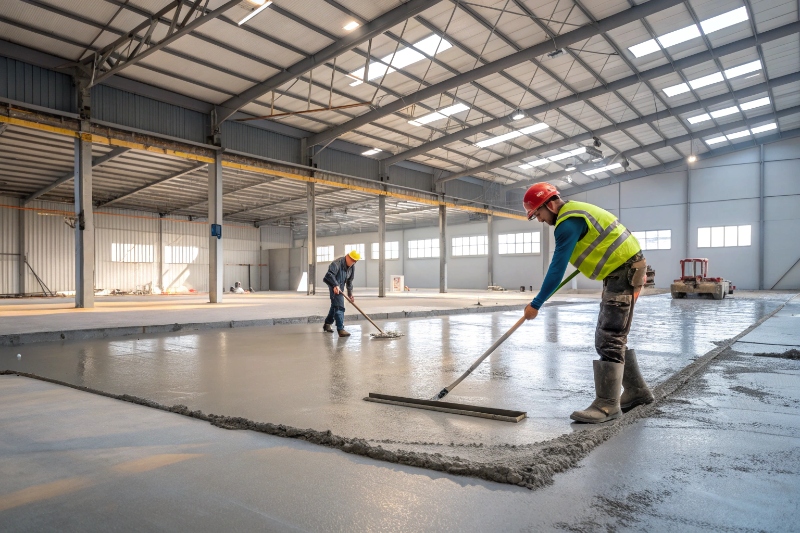
Industrial concrete projects require more coordination than residential work. We start with a site assessment to understand your load requirements, traffic patterns, and operational constraints.
Next comes detailed specification development. We calculate required concrete strength, reinforcement design, and joint layouts based on your actual use. For regulated industries like food processing or pharmaceuticals, we incorporate additional requirements for hygiene, cleanability, and compliance documentation.
The installation phase focuses on minimising disruption. We coordinate material deliveries to avoid blocking your operations, section off work areas with clear barriers, and provide realistic timelines for each phase—from subgrade preparation through final curing. You can walk on industrial concrete after 24-48 hours, full load-bearing capacity for forklift traffic requires 28 days of curing.
We conclude every commercial project with comprehensive documentation, including material certifications, strength test results, and as-built specifications that satisfy insurance requirements and building compliance audits.


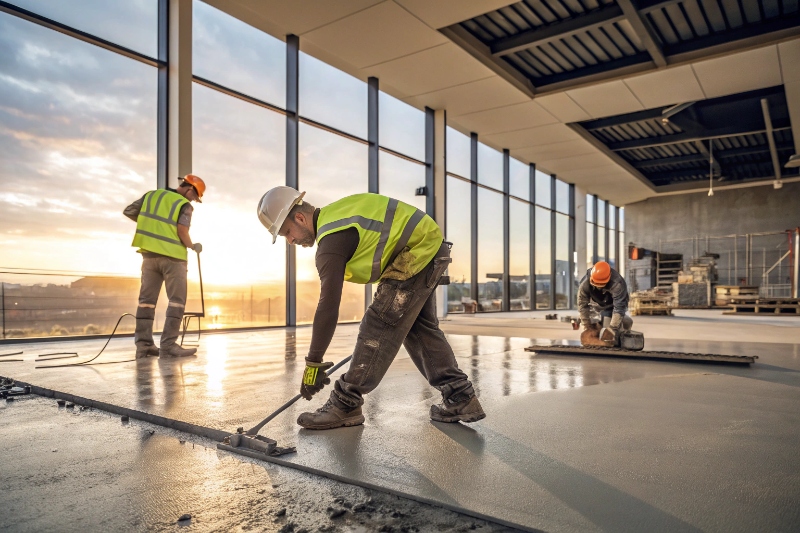
Industrial Concrete Applications We Handle
Manufacturing facility floors | Warehouse concrete flooring | Loading dock construction | Commercial car park concreting | Cold storage floors | Food processing facility flooring | Chemical storage areas | Workshop floors | Retail centre concrete | Distribution centre flooring
Service Areas: Newcastle, Hunter Valley & Port Stephens
We provide industrial concrete services throughout Newcastle’s commercial and industrial zones, including Tomago, Beresfield, Thornton, Mayfield, Carrington, and Kooragang Island. Our commercial concreting extends across the Hunter Valley and Port Stephens regions for larger industrial projects.
Frequently Asked Questions About Industrial Concreting
How long before we can use a new industrial concrete floor?
Initial foot traffic is possible after 24-48 hours, depending on conditions. Light vehicle traffic typically requires 7 days, while full load-bearing capacity and forklift traffic needs 28 days for complete curing. We provide accelerated curing options for urgent situations, though this may affect long-term performance.
What's the difference between industrial concrete and standard residential concrete?
Industrial concrete uses higher strength mixes (typically 32-40 MPa versus 20-25 MPa for residential), increased reinforcement, and often includes additives for faster curing, chemical resistance, or reduced shrinkage. Industrial floors also require specific joint spacing, surface finishes for traction, and may need hardener treatments for forklift traffic.
Can you repair concrete floors without shutting down our entire facility?
Yes—we section off repair areas and complete work in stages so most of your facility remains operational. For extensive repairs requiring total shutdown, we maximise crew size to complete work during scheduled maintenance windows or holiday periods.
How much does industrial floor concrete repair cost compared to replacement?
Concrete repair typically costs 40-60% less than full replacement and causes far less operational disruption. We assess whether repair is viable—sometimes deterioration is too extensive, and replacement is the only long-term solution. We provide both options with honest recommendations.
Do industrial concrete floors need sealing or coating?
Not always—plain concrete works for many applications. However, sealing prevents oil stains and makes cleaning easier, while epoxy coatings provide chemical resistance and eliminate concrete dust. We recommend protective systems for food processing, chemical storage, or high-maintenance environments. The investment usually pays back within 2-3 years through reduced cleaning costs.
What causes industrial concrete floors to fail prematurely?
Common causes include inadequate reinforcement for actual loads, poor subgrade preparation, incorrect joint spacing, exposure to chemicals without protective coating, or using residential-grade concrete for industrial applications. Forklift traffic on under-specified concrete accelerates failure. We design floors based on actual use—not minimum standards.
Get a Detailed Industrial Concrete Quote from A1 Concreters Newcastle
Industrial projects require detailed specifications—not ballpark estimates. A1 Concreters Newcastle assesses your site, discusses load requirements and timing constraints, and provides itemised quotes with material specifications and project timelines.
Contact us for a site inspection: Call 0482085820 or submit an enquiry through our website. We respond to all commercial concrete enquiries within one business day and can typically arrange site visits within 48 hours for Newcastle and Hunter Valley locations.
