
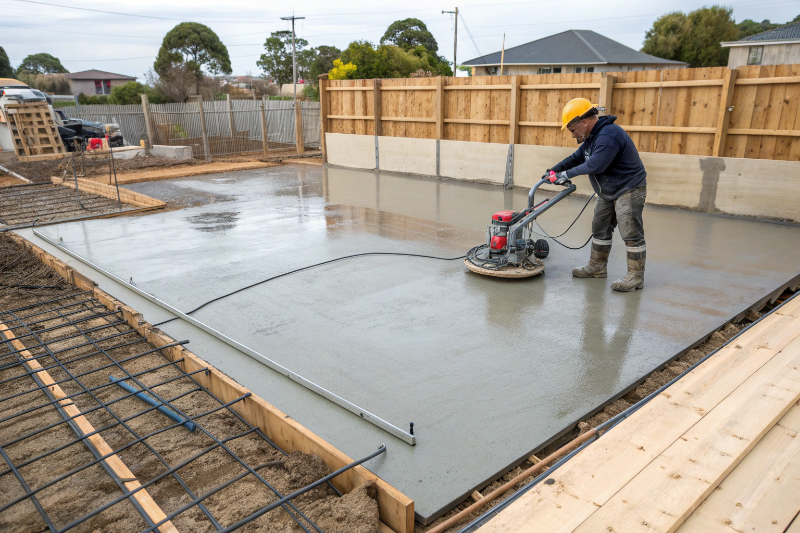
Local Foundation Expertise Across the Hunter Region
We’ve built foundations across Newcastle’s full range of soil conditions, from stable coastal sites through Merewether and The Junction to reactive clay zones inland toward Maitland and Cessnock. This experience shapes how we approach each project, understanding how seasonal moisture affects different soil types throughout the Hunter Region’s wet winters and dry summers.
Working with local geotechnical engineers and their design approaches, we know what Newcastle certifiers expect during inspections and what documentation satisfies their compliance requirements. We manage challenging access through established suburbs around Hamilton, Mayfield, and Wickham, where tight streets and existing construction limit equipment movement.
Sloping sites requiring cut and fill or split-level foundations remain common throughout Newcastle’s hilly terrain, and we’ve developed efficient methods for handling these challenging conditions. Our portfolio spans simple residential house slabs through to complex commercial systems, from beachside suburbs to Lake Macquarie and across to Maitland, delivering compliant foundations across all soil classifications and building types.

Complete Concrete Foundation Systems Newcastle
We build integrated foundation systems where every component works together, supporting your structure. Strip footings run under perimeter and internal walls, pad footings sit beneath columns and posts, and spread footings distribute loads across wider soil areas. These transfer building weight to the ground,d preventing settlement and structural movement.
House slabs create your ground floor platform, suspended slabs work for upper levels or elevated construction, and waffle pod systems handle reactive Newcastle soils. Conventional reinforced slabs suit stable ground conditions across coastal areas.
Deep concrete piers extend below reactive soil zones reaching stable strata, screw piles tackle challenging ground conditions, and pier and beam systems remain common throughout Newcastle’s residential suburbs. Basement foundations combine reinforced walls and floors with waterproofing systems resisting earth pressure.
Each element integrates into a complete foundation system designed specifically for your site conditions, building type, and structural loads, with engineers calculating exact requirements, thus ensuring adequate capacity and full compliance.
Residential House Foundation Construction
We construct house foundations suited to Newcastle’s varied soil conditions and residential building designs. Stiffened raft slabs remain standard for single-story homes, providing integrated footings and floor systems in one concrete pour. Waffle pod systems work specifically for reactive Newcastle soils, using void formers that allow soil movement without transferring stress to the slab above.
Suspended slabs suit split-level designs on sloping blocks throughout Charlestown, Kotara, and Adamstown, creating level building platforms where natural terrain drops away. Conventional strip footings with separate slab work well on stable coastal sites around Merewether, Bar Beach, and Newcastle East,t where soil conditions don’t require specialised reactive soil solutions.
Pier and beam foundations handle challenging terrain, including steep blocks around The Hill and Hamilton South, with deep piers reaching stable bearing strata below problematic surface soils. We match our foundation approach to your specific site classification, building design, and engineering specifications.


Commercial Building Foundation Solutions
We deliver commercial foundation systems handling substantial structural loads and specialised building requirements. Heavily reinforced slabs support warehouses and industrial facilities throughout Tomago, Beresfield, and Thornton, designed for equipment loads, material storage, and constant traffic patterns that residential slabs can’t accommodate.
Deep footings support multi-story structures across Newcastle CBD and surrounding commercial zones, transferring upper-floor loads through columns into foundation systems engineered for concentrated loading. Basement construction suits CBD buildings requiring below-ground parking or additional floor space, with reinforced concrete walls resisting earth pressure and comprehensive waterproofing preventing groundwater infiltration.
Specialised foundations handle heavy equipment installations, cold storage facilities, and industrial processes generating vibration or dynamic loads. We work directly with structural engineers and project managers, coordinating foundation construction within tight commercial timelines, managing certifier inspections, and delivering compliant bases enabling building progression across all commercial applications from small retail through to major industrial developments.
Newcastle Soil Conditions & Foundation Engineering
Foundation design starts with a geotechnical investigation, determining soil bearing capacity, reactivity levels, and ground characteristics across your site. Engineers use soil classification systems ranging from Class A stable ground through to Class P highly reactive soils, with this classification dictating your entire foundation approach. Structural engineers calculate footing sizes, reinforcement specifications, and excavation depths based on allowable bearing pressure and expected building loads, accounting for seasonal moisture variation that affects reactive soil behaviour throughout Newcastle’s wet winters and dry summers.
Newcastle presents specific foundation challenges that shape our construction approach:
- Widespread highly reactive clay soils (Class H sitesdominateng inland suburbs, requiring specialised waffle pod or stiffened raft systems
- Coastal sand profiles around beaches and harbor offering stable bearing conditions
- Sloping terrain throughout older suburbs complicates excavation and foundation work
- Heavy Hunter Region rainfall is affecting drainage design and moisture management
Inadequate foundation design causes differential settlement, cracking of walls and floors, movement affecting doors and windows, and potential structural failure. Proper geotechnical assessment, qualified engineer design, and quality construction ensure your foundation performs reliably throughout the building’s entire life.
Concrete Slabs & Floor Systems
We pour concrete slabs forming the structural floor platform and finished surface for your building. Stiffened raft slabs integrate edge beams and internal beams into a single reinforced system, standard for most Newcastle residential construction on reactive soils. The stiffening beams resist differential ground movement, preventing slab cracking as clay soils expand and contract with moisture changes.
Waffle pod slabs use polystyrene void formers, creating a grid of concrete beams over the pods, reducing concrete volume while maintaining structural capacity. Thessuitsit highly reactive Class H and Class P sites throughout western Newcastle sub-urbs, where conventional slabs would crack under extreme soil movement.
Conventional reinforced slabs work on stable Class A sites around coastal areas, using flat reinforced concrete without complex beam systems. Suspended slabs span between supporting walls or beams for upper floors, split-level designs, or elevation construction, to clear flood levels.
Each slab type gets specified by your structural engineer based on soil classification, building loads, and Australian Standards requirements,ments ensuring adequate strength and durability.

Foundation Footings & Load Transfer Systems
Footings form the critical connection between your building structure and the ground below, distributing concentrated loads across a sufficient soil area, preventing excessive bearing pressure and settlement. Strip footings run continuously under walls,s spreading the load along their length, pad footings sit beneath individual columns or posts, transferring point loads, and spread footings widen out where soil bearing capacity requires larger bearing areas. These concrete elements transfer your building’s entire weight safely into the ground.
Different footing types suit specific structural requirements:
- Strip footings supporting perimeter and internal load-bearing walls in typical residential construction
- Pad footings under steel or timber posts in pole homes and carports
- Combined footings where multiple loads share a single footing element
- Deep footings extending below reactive soil zones on difficult sites
We size footings according to thengineer’ser calculations based on actual loads and tested soil bearing capacity, with adequate reinforcement preventing footing cracking or failure. Proper footing depth, width, and reinforcement ensure your building sits on solid support that won’t settle, move, or fail under the structural loads above.



Frequently Asked Questions About Concrete Foundations in Newcastle
What type of foundation does my house need?
Foundation type depends on your soil classification, building design, and structural loads. Most Newcastle homes use stiffened raft slabs or waffle pod systems on reactive soils. Coastal stable sites often suit conventional slabs. Your structural engineer specifies the appropriate foundation system following geotechnical testing results.
Why is geotechnical testing important?
Geotechnical reports determine soil bearing capacity, reactivity classification, and moisture characteristics that dictate foundation design. Without proper soil testing, engineers can’t specify adequate footings, leading to undersized foundations, structural movement, cracking, and potential building failure. Testing protects your investment ensuring appropriate foundation design for actual ground conditions.
What are reactive soils and why do they matter?
Reactive soils contain clay that expands when wet and shrinks when dry, causing ground movement that cracks conventional foundations. Much of Newcastle sits on Class H highly reactive clay requiring specialised waffle pod or stiffened raft systems. These foundations resist differential movement preventing structural damage throughout seasonal moisture cycles.
What Australian Standards apply to foundations?
Concrete foundations must comply with AS 2870 (Residential Slabs and Footings) and AS 3600 (Concrete Structures). These standards specify minimum concrete grades, reinforcement requirements, design methods, and construction tolerances. AS 1379 governs concrete supply quality. Compliance ensures structural adequacy, building approval, and warranty coverage throughout the building’s life.
When does foundation work happen in the building process?
Foundation construction occurs after site clearing, bulk earthworks, and any required retaining walls, but before frame erection. We complete footings and piers first, then pour the slab, creating a level platform for building construction. Plumbing penetrations get installed before the slab pour. Foundation completion enables frame construction commencement.
What indicates foundation problems in existing buildings?
Foundation issues show as cracks in walls (especially diagonal cracks at corners), uneven floors, doors and windows sticking or not closing properly, gaps appearing between walls and ceilings, and exterior cracking in brickwork. These indicate differential settlement or ground movement requiring professional assessment and potential underpinning or foundation repair.
What's the difference between waffle pod and conventional slabs?
Conventional slabs use flat reinforced concrete on stable soils. Waffle pod slabs incorporate polystyrene void formers creating a grid of concrete beams, reducing weight while providing flexibility for reactive soil movement. Waffle pods suit Class H and Class P reactive Newcastle soils preventing cracking that would destroy conventional slabs.
Get Your Foundation Construction Quote Today
Contact our Newcastle concrete foundation team for your residential or commercial foundation requirements. We handle all soil classifications from stable coastal sites to highly reactive clay, working directly with engineers, ensuring compliant foundation systems across every building type.
Our experience covers house slabs through to multi-story commercial foundations, with complete knowledge of Newcastle’s soil conditions, certification requirements, and Australian Standards compliance. We coordinate geotechnical assessments, engineer specifications, and building certifier inspections, delivering quality foundations supporting your structure reliably.
Call us todayto discussg your foundation project. We’ll review your plans, assess site conditions, and provide detailed quotes for building solid structural bases across Newcastle, Lake Macquarie, and Maitland.
