
What type of concrete footings do I need?
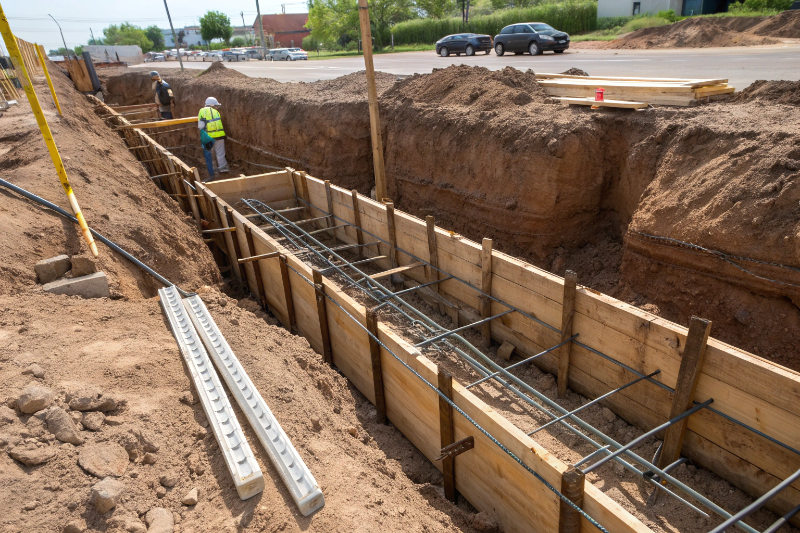
The type of concrete footing required depends on your soil classification and structural loads:
Strip Footings: Continuous concrete beams supporting walls in brick veneer and masonry construction, standard for stable soils (Class A-S)
Pad Footings: Individual square or rectangular pads supporting posts and columns for pergolas, decks, and carports
Stiffened Raft Footings: Integrated slab and edge beam system for reactive clay soils (Class H, M, P), common across Newcastle
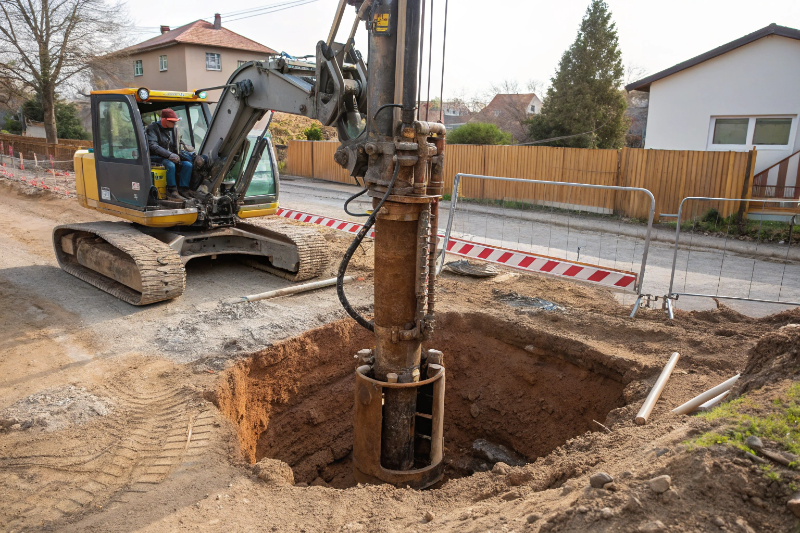
Pier and Beam Footings: Deep concrete piers extending below moisture variation zones, needed for highly reactive Newcastle soils, preventing foundation movement
Retaining Wall Footings: Reinforced bases designed to resist earth pressure on sloping sites.
In Newcastle, soil reactivity determines footing type. A geotechnical report classifies your soil, and engineers design footings using N20-N32 concrete strength to meet Australian Standards AS 2870 and make sure your structure stays compliant.

Types of Concrete Footings in Newcastle


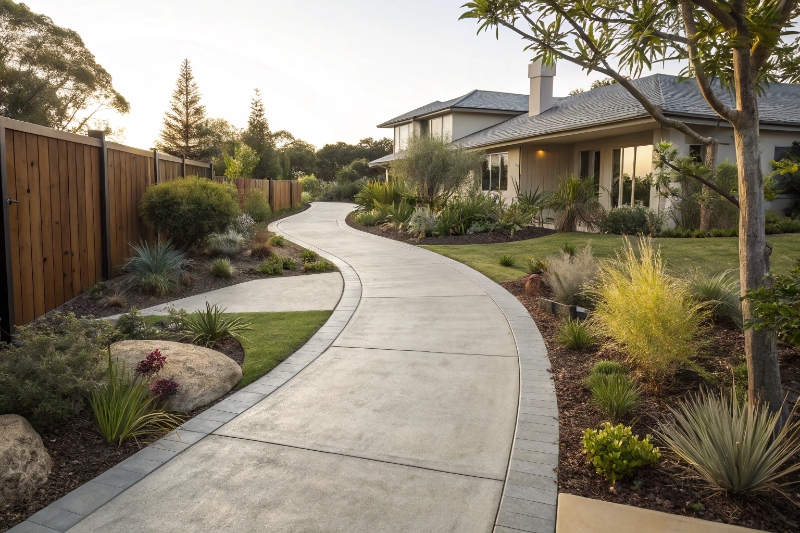

Why Proper Concrete Footings Matter
Structural Load Transfer
Footings transfer your building’s loads safely into the ground below. Without proper load distribution, you get settlement and structural movement that shows up as cracked walls, stuck doors, and uneven floors. Good footings are the foundation of structural integrity—literally everything above depends on them doing their job right.
Newcastle’s Soil Challenges
Our highly reactive clay soils—Class H sites are common right across the region—expand and contract with seasonal moisture changes. Coastal areas near Merewether have sandy conditions, while inland suburbs like Maitland sit on expansive clay. These variations mean your footing design needs to match your specific site, not just generic specifications.
Cost of Inadequate Footings
We’ve seen what happens when footings aren’t done right. Structural cracking through brick walls. Floor slabs that heave and crack. Foundation failure that costs tens of thousands to repair. Getting your footings engineered and built properly from the start saves you from repair bills that dwarf the initial construction cost.
Footing Design & Engineering Requirements
Soil Classification Process
Your site needs a geotechnical report that classifies soil from Class A (stable) to Class P (highly expansive). This determines your footing design requirements. Engineers use this classification to design footings that meet code compliance and handle your specific soil conditions.
Technical Specifications
Minimum depths vary based on soil reactivity—sometimes 2-3 meters on reactive sites. Reinforcement uses N12 or N16 bars, mesh, and stirrups as specified. Concrete strength ranges from N20 minimum to N32 for structural applications, depending on the engineer’s requirements.
Australian Standards Compliance
All footings must meet AS 2870 requirements for residential slabs and footings. We work with Newcastle engineers and certifiers throughout the process, making sure your footings get approved and pass all building code inspections before concrete gets poured.
Our Footing Construction Process
Site Assessment & Planning
We start with site inspection and soil assessment review. Our team coordinates with your engineer to understand specification requirements, then prepares for excavation work and pier drilling based on the approved design for your specific soil conditions.
Formwork & Reinforcement Installation
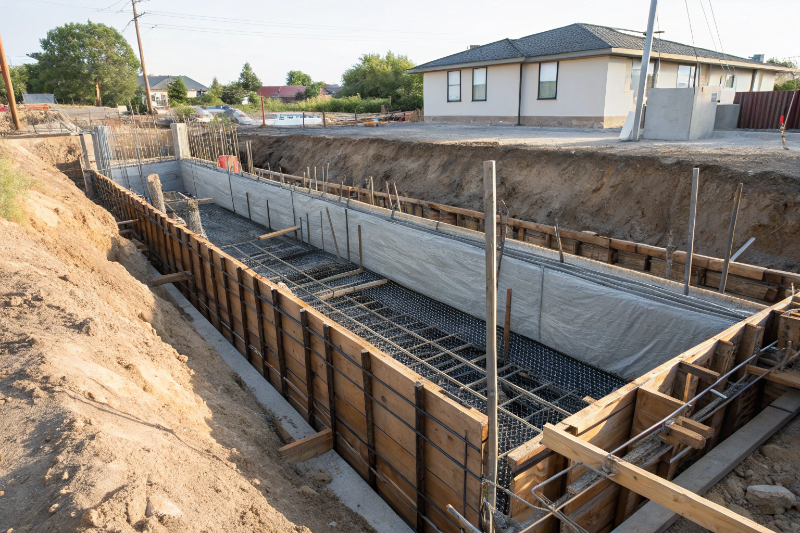
Formwork gets set up for strip footings and beams according to the engineer’s drawings. We place reinforcement following exact specifications—bar spacing, concrete cover, and tie wire connections all checked before any concrete arrives on site.
Concrete Placement & Certification
Concrete gets poured using the specified grade for your project. We compact thoroughly to eliminate voids and air pockets. After curing, your engineer inspects the work and provides certification that the footings meet Australian Standards before construction continues.
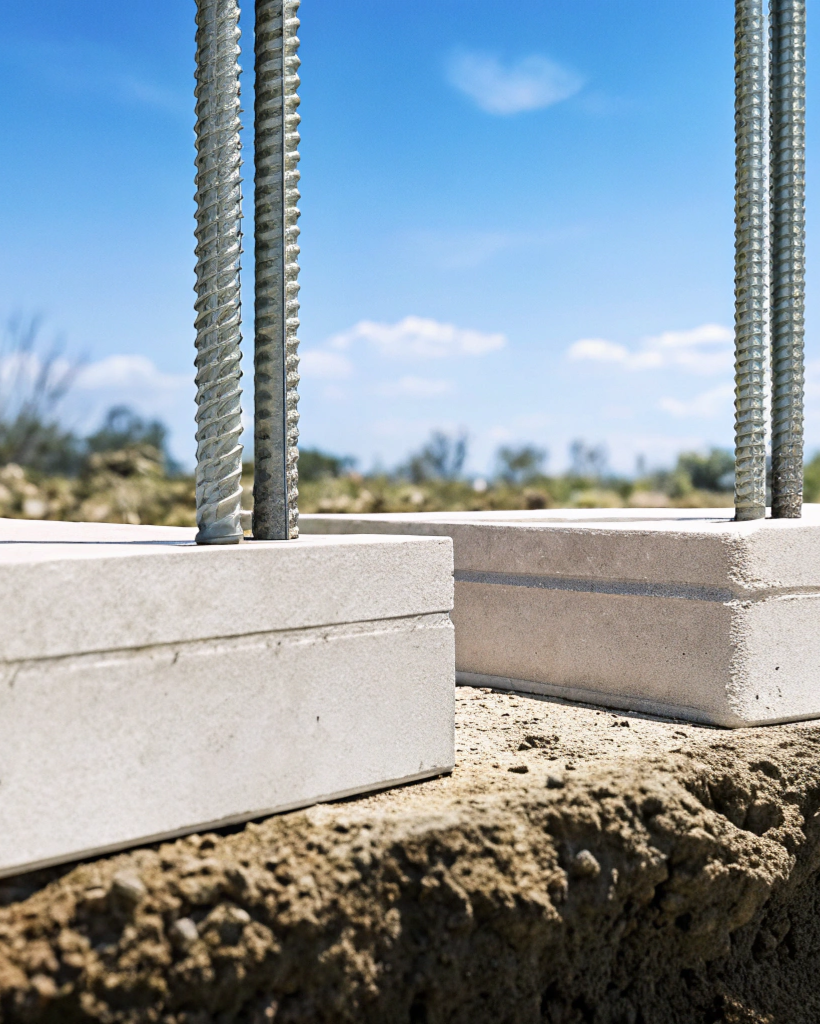
Reactive Clay Soil Experience: We specialise in deep pier systems for Class H and P soils that expand and contract with moisture. Our footing designs account for seasonal moisture variation and Hunter Region climate patterns that affect soil movement throughout the year.
Geographic Variations Across Newcastle: Coastal sand near Merewether and Stockton requires different footing approaches than inland clay around Maitland. Sloping terrain needs cut and fill considerations. We handle local council compliance for Newcastle, Lake Macquarie, and Maitland building requirements.
Site Access & Equipment Solutions: Narrow site access in established suburbs requires specialised equipment selection. We bring the right machinery for confined spaces and coordinate timing with building inspectors to keep your project moving without delays or access problems.
Footing Applications & Project Types
Residential Footing Projects
New home construction across all soil classifications, from stable Class A sites to highly reactive Class P clay. House extensions and additions requiring engineered footings. Second-story additions need strengthened foundations to carry increased structural loads safely.
Retaining Walls & Outdoor Structures
Retaining wall footings are engineered for sloping sites and earth pressure resistance. Pergolas and covered outdoor areas with pad footings designed for soil conditions. Carports and garages require strip footings or slab edge beams, depending on your site.
Commercial & Industrial Footings
Multi-story buildings and warehouses with heavy structural loads. Industrial facilities and infrastructure require specialised footing systems. Heavy-duty engineer-designed footings built to commercial standards and load requirements beyond typical residential applications.
Frequently Asked Questions About Concrete Footings in Newcastle
How deep do concrete footings need to be in Newcastle?
Footing depth depends on your soil classification. On stable Class A soils, we might go 300-400mm deep. For Newcastle’s common reactive clay sites (Class H, M, P), we’re often drilling piers 1.5 to 3 meters down to get below the moisture variation zone. Your geotechnical report tells us exactly what depth your site needs.
Do I need a soil test before getting footings?
Yes, you need a geotechnical report. We can’t design or quote footings accurately without knowing your soil classification. The report costs around $800-1,500, but it’s required by the council and tells us whether you need basic strip footings or engineered pier systems for reactive clay.
How long do concrete footings take to cure?
We typically wait 7 days minimum before loading footings, though concrete keeps gaining strength for 28 days. In Newcastle’s humid coastal climate, proper curing is important—we keep footings moist during the curing period to prevent cracking and ensure full strength development.
Can you pour footings in winter?
Yes, we pour footings year-round in Newcastle. Winter actually works well because cooler temperatures mean slower curing and often stronger concrete. We avoid pouring in rain or when temperatures drop below 5°C, but Newcastle’s mild winters rarely cause scheduling problems.
What's the difference between footings and a slab?
Footings are the deep structural elements that transfer loads into the ground, like the roots of your building. The slab is the floor surface you walk on. On reactive clay sites, we often use stiffened raft slabs where the edge beams act as integrated footings supporting the whole system.
Can you work from my engineer's plans?
Yes, that’s how we prefer to work. We follow engineer specifications exactly—depths, reinforcement schedules, concrete grades, all of it. We coordinate directly with your engineer throughout the process and arrange their inspections before concrete is poured.
Need Expert Concrete Footings in Newcastle?
Don’t risk your building’s structural integrity with inadequate footings. A1 Concreters works with engineers to deliver compliant footing construction for all Newcastle soil conditions—from reactive Class H clay to coastal sites.
We handle residential and commercial projects across Newcastle, Lake Macquarie, and Maitland. Our team coordinates with geotechnical engineers and building certifiers to make sure your footings meet Australian Standards AS 2870 and pass all inspections.
Get Your Free Footing Quote
Call now: 0482085820
Email: info@concretersnewcastle.com
Service areas: Newcastle, Lake Macquarie, Maitland, Hunter Region
