
How Much Does a Concrete Retaining Wall Cost in Newcastle?
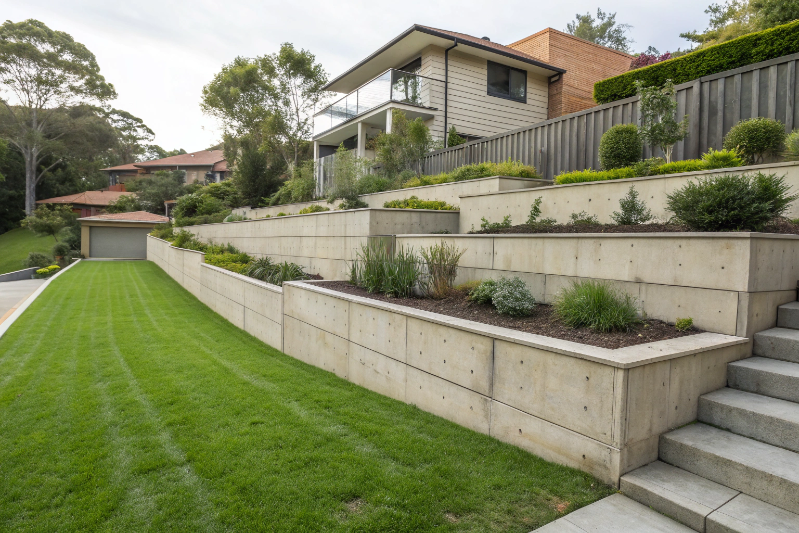
Concrete retaining walls in Newcastle typically cost $400-$700 per square metre for professional installation, with total project costs varying based on wall height, site conditions, and engineering requirements.
Cost breakdown by wall type:
- Concrete block retaining walls: $350-$500/m² (walls under 1.5m)
- Poured concrete retaining walls: $500-$700/m² (engineered walls 1-4m height)
- Cantilever concrete walls: $600-$850/m² (taller walls with complex engineering)
Factors affecting your retaining wall costs:
- Wall height and length (higher walls require engineering, increasing costs)
- Site access and excavation difficulty in Newcastle’s hilly terrain
- Soil conditions requiring deeper footings or additional reinforcement
- Drainage requirements and stormwater management systems
- Engineer design fees ($800-$2,500) and council approval costs ($200-$800)
- Complexity of level changes and corners
Small residential garden walls (10-15m²) typically range $4,000-$7,500, while substantial property retaining walls (30-50m²) cost $15,000-$35,000+, including engineering and drainage.

Concrete Retaining Wall Applications in Newcastle


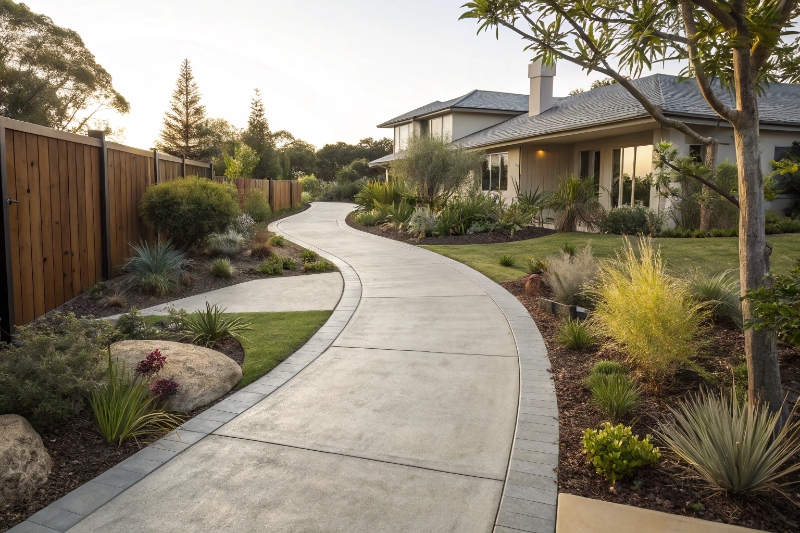

Types of Concrete Retaining Walls for Newcastle Properties
Poured Concrete Retaining Walls: Poured concrete retaining walls are the strongest option we build—solid reinforced concrete cast on-site with engineered footings. These walls handle heights up to 3-4 meters and work brilliantly in Newcastle’s reactive clay soils and challenging terrain.
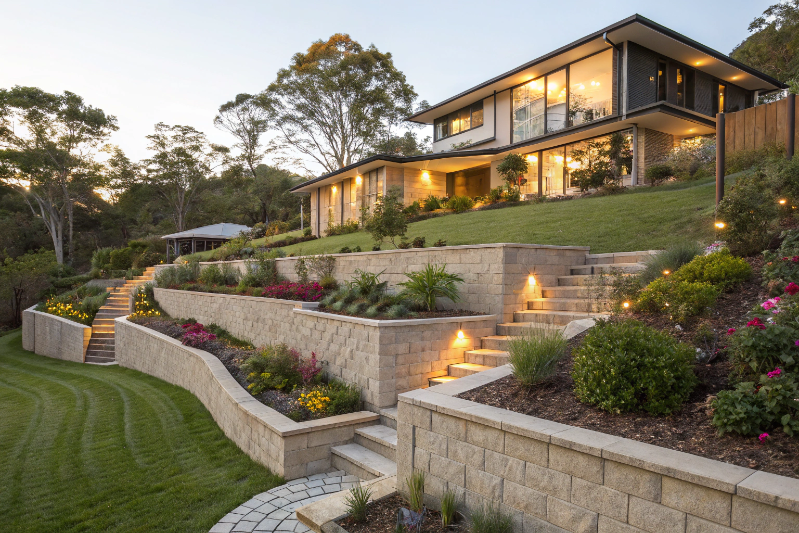
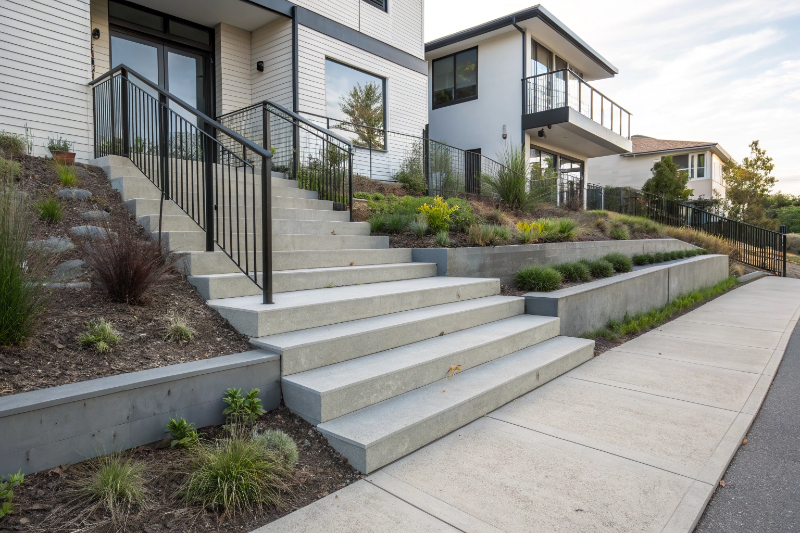
Concrete Block Retaining Walls: Interlocking concrete block systems offer faster installation and various finish options, perfect for residential garden terracing. These modular walls work well for lower heights (under 1.5m) and provide attractive, cost-effective solutions for Newcastle homeowners wanting terraced outdoor spaces.
Cantilever and Gravity Wall Systems: Cantilever walls use L-shaped reinforced concrete design for taller applications, while gravity walls rely on mass for lower retention. Both require an engineer’s design, calculating specific loads, soil pressure, and structural requirements meeting Australian Standards for your site.
Choosing the Right Retaining Wall Type: Wall selection depends on height requirements, soil conditions, available space, and budget. Newcastle’s reactive clays, heavy rainfall, and sloping terrain all influence which wall type works best. We work with structural engineers, recommending the optimal solution for your property’s specific conditions.
Engineering and Design Requirements for Newcastle Retaining Walls
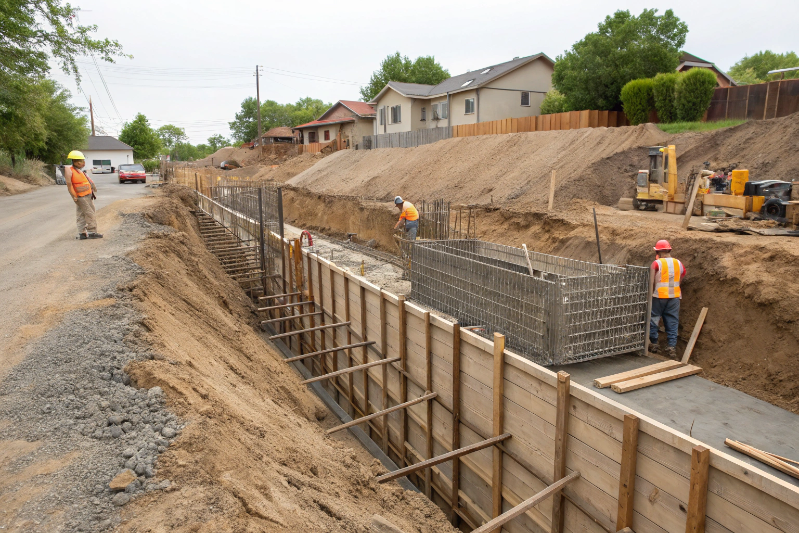
Structural Engineering Essentials: Any retaining wall over 1 meter high in Newcastle requires a structural engineer’s design—it’s not optional. Engineers conduct geotechnical assessments, analysing your soil composition, calculating structural loads and lateral pressure, then design reinforcement specifications and drainage systems, preventing wall failure and ensuring compliance.
Newcastle-Specific Design Considerations: Newcastle’s reactive clay soils expand and contract with moisture changes, creating additional pressure on retaining walls. Heavy Hunter Valley rainfall (averaging 1,100mm annually) demands robust drainage design. Coastal area salt exposure and sloping site load calculations all influence engineering requirements for walls built across the Hunter Region.
Council Approvals and Compliance: Most retaining walls in Newcastle require development approval from the council before construction starts. Building certifiers inspect footings, reinforcement, and drainage at critical stages. All walls must comply with AS 4678 standards. We coordinate with qualified structural engineers and handle council liaison throughout the approval process.
Critical Construction Features of Durable Retaining Walls
Foundation and Structural Elements
Reinforced concrete footings provide the foundation—typically 600-900mm deep depending on wall height and soil conditions. Wall thickness varies from 200mm for low walls to 400mm+ for taller structures. Steel reinforcement, control joints preventing cracking, and waterproofing membranes all combine to create durable, long-lasting retaining structures.
Drainage Systems (Critical for Newcastle)
Agricultural drainage pipe (Agi pipe) runs behind every retaining wall we build, collecting water before it creates hydrostatic pressure. Drainage aggregate (blue metal or similar free-draining material) surrounds the pipe, while weep holes allow water escape. Newcastle’s heavy rainfall makes proper drainage absolutely critical—it’s the difference between walls lasting decades versus failing within years.
Quality Materials and Backfill
We use concrete meeting Australian Standards with appropriate reinforcement mesh and steel bars. Free-draining backfill material (not clay soil) goes behind walls, preventing water retention. Moisture management systems, including waterproofing and drainage layers, protect the wall structure and prevent saturation, causing pressure buildup and potential failure.
Assessment and Design Phase
We evaluate your site, assessing slope angle, soil type, drainage patterns, and access for machinery. Then we liaise with structural engineers, developing compliant designs and coordinating council approval submissions.
Construction and Installation
Excavation prepares the site, followed by footing construction with steel reinforcement. We build walls using poured concrete or block systems, install drainage pipes and aggregate, then implement quality control throughout curing.
Certification and Project Completion
Building certifiers inspect footings, reinforcement, and drainage at required stages. We backfill with approved free-draining materials, obtain final engineer certification, then provide handover documentation and maintenance guidance for your completed wall.
Why Choose Professional Concrete Retaining Walls in Newcastle
Long-Term Durability and Value: Properly constructed concrete retaining walls last 50+ years with minimal maintenance. They resist Newcastle’s coastal conditions, weather extremes, and termites while significantly enhancing property values compared to timber alternatives.
Safety and Compliance Assurance: Engineer-designed walls prevent catastrophic failures, causing property damage and injury. Council-approved construction meets all regulations, and our public liability insurance protects you throughout the project.
Newcastle Terrain Expertise: We’ve built retaining walls across Newcastle’s challenging slopes for years, understanding Hunter Region conditions. Established relationships with local engineers and an extensive portfolio across Newcastle, Lake Macquarie, and Maitland.
Frequently Asked Questions About Concrete Retaining Walls in Newcastle
Do I need council approval for a retaining wall in Newcastle?
Most retaining walls in Newcastle require council approval, especially walls over 1 meter high or within certain distances from boundaries. We handle the council application process for you, working with structural engineers to submit compliant designs. Some smaller walls under 1m may be exempt, but we always check your specific requirements before starting work.
How long does it take to build a concrete retaining wall?
Timeline depends on wall size and complexity, but typical residential retaining walls take 2-4 weeks from start to finish. This includes excavation, footing construction, wall building, drainage installation, and proper concrete curing time. Larger commercial projects or walls requiring extensive engineering may take 6-8 weeks. Council approval adds 4-6 weeks before construction starts.
Will a retaining wall stop water damage on my sloping property?
Yes, properly designed retaining walls with drainage systems manage water runoff and prevent erosion on sloping Newcastle properties. We install agricultural drainage pipes behind every wall, collecting water before it creates pressure or washes away soil. The drainage system directs water to appropriate outlets, protecting both the wall and your property from water damage.
What's the difference between poured concrete and block retaining walls?
Poured concrete walls are stronger and better for taller walls or challenging Newcastle soil conditions—we cast solid reinforced concrete on-site. Block retaining walls use interlocking concrete blocks, install faster, and work well for lower residential walls under 1.5m. We recommend the best option based on your wall height, soil type, and budget.
How do I know if my soil is suitable for a retaining wall?
We conduct site assessments examining your soil type, drainage, and slope angle. Newcastle’s reactive clay soils require specific footing depths and drainage design. For walls over 1m, structural engineers perform geotechnical testing, analysing soil composition and bearing capacity. This ensures we design footings and drainage appropriate for your specific soil conditions.
Do concrete retaining walls crack over time?
Properly designed concrete retaining walls include control joints that manage minor movement and prevent random cracking. Small hairline cracks can appear, but don’t affect structural integrity. We design walls specifically for Newcastle’s reactive clay soils that expand and contract with moisture changes. Good drainage systems prevent hydrostatic pressure, causing structural cracks or failure.
Create Usable Space on Your Sloping Newcastle Block
From design to council approval to construction—we manage every step of your retaining wall project. Our engineer-designed concrete retaining walls are built specifically for Newcastle’s reactive clay soils, heavy rainfall, and challenging terrain. Whether you need a small garden terrace or substantial commercial retention, we deliver compliant, durable solutions that protect your property and create functional outdoor spaces.
Get your free site assessment today.
Call 0482085820 or request your free quote online. Let’s transform your sloping property into usable space that lasts for decades.
A1 Concreters Newcastle – Professional concrete retaining walls across Newcastle, Lake Macquarie, Maitland, and the Hunter Valley.
