What Type of Slab is Best for a House?

The best house slab type depends entirely on your soil classification, determined by geotechnical testing. There’s no one-size-fits-all answer—what works perfectly on stable sand will fail catastrophically on reactive clay.
For Reactive Clay Soils (Class H & P – Common in Newcastle):
- Waffle Pod Slabs – Engineered polystyrene void formers with reinforced beams, specifically designed to handle soil movement and moisture variation
- Stiffened Raft Slabs – Reinforced concrete with integrated beams providing rigidity against ground movement
For Stable Soils (Class A & S):
- Conventional Reinforced Slabs – Solid concrete with steel mesh, cost-effective for non-reactive sites
- Standard Raft Slabs – Simple reinforced design suitable for stable conditions
For Sloping Sites:
- Suspended Slabs – Elevated systems supported by columns or walls
Newcastle’s predominantly Class H (highly reactive) soils typically require waffle pod or stiffened raft slabs to prevent structural cracking, uneven floors, and costly foundation repairs.

House Slab Systems We Install in Newcastle
Understanding Newcastle's Soil Classifications & Your Slab Requirements
Why Soil Testing is Critical Before Construction: Geotechnical soil testing classifies site reactivity from Class A (stable) to Class P (highly reactive), determining your required slab design. This classification is legally required and prevents structural failure, costing far more than the initial testing investment.
Newcastle’s Reactive Clay Soil Challenges: Newcastle features predominantly Class H (highly reactive) and Class M (moderately reactive) clay soils. Hunter Valley reactive clays expand and contract with seasonal moisture changes, causing ground movement across Maitland, Cessnock, and Lake Macquarie, requiring engineered slab solutions.
How Soil Classification Determines Slab Design: Class A needs simple slabs. Class S requires basic reinforcement. Class M demands stiffened designs. Class H (common in Newcastle) needs a waffle pod or substantial, stiffened systems. Class P requires specialised deep piers preventing structural cracking, uneven floors, and serious damage.
House Slab Construction Standards & Specifications
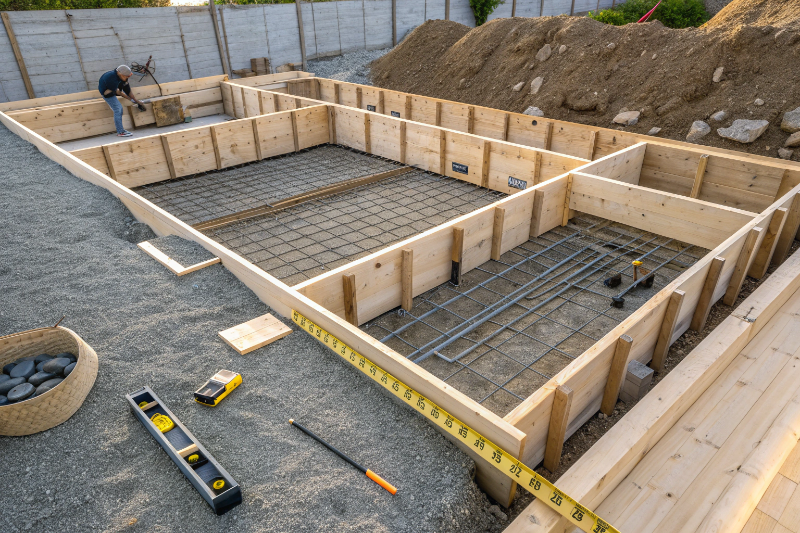
Engineering Requirements & Building Compliance: Engineer-designed plans are required for all house slabs, complying with AS2870 and Newcastle Building Code. Building certifier inspections occur at critical stages. We coordinate council approval and compliance documentation with structural engineers and geotechnical consultants throughout the process.
Concrete Grades & Reinforcement Standards: Minimum N25 concrete grade for residential slabs. Steel reinforcement matches the engineer’s specifications with mesh, bar chairs, and spacing requirements. Minimum 100mm slab thickness with edge beams 300-600mm deep. Reactive sites need pier depths exceeding 2-3 meters in challenging locations.
Termite Protection & Moisture Barriers: Damp-proof membrane prevents ground moisture from rising through slabs. Physical or chemical termite barriers integrate with slab construction in termite-prone Newcastle areas. These systems meet Building Code requirements for moisture protection and termite management across coastal and inland properties.
Our House Slab Construction Process
Site Preparation & Engineer Coordination: We review the engineer’s slab design and geotechnical reports before starting. Site preparation includes clearing, levelling building platforms, and excavating unsuitable topsoil. We establish correct site levels, assess equipment access, and coordinate construction schedules with your builder through pre-construction stakeholder meetings.
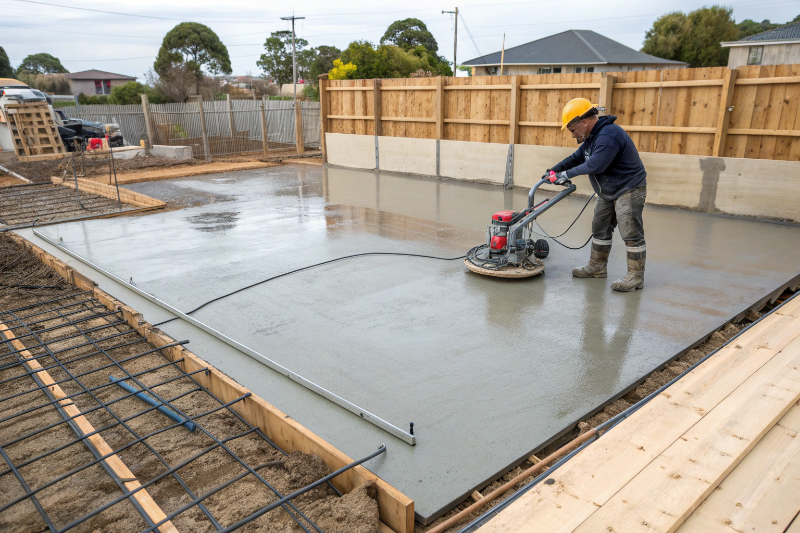
Installation & Quality Control Stages: Pier drilling reaches specified depths on reactive sites using specialised equipment. We install compacted base layers, damp-proof membranes, and termite barriers. Edge beam formwork and waffle pod layout follow, then reinforcement installation, matching the engineer’s specifications. Plumbers install underfloor services before concrete placement and laser screed levelling.
Certifier Inspections & Final Documentation: The building certifier conducts pre-pour inspections, checking all elements and reinforcement approval before concrete placement. Post-pour inspection and certification follow, with engineer certification and compliance documentation completing the process. We provide slab certification for building approval, handover documentation to builders, and warranty certificates.



Why Quality House Slabs Matter for Newcastle Homes
Preventing Structural Problems & Future Repair Costs: Proper slab construction prevents structural cracking, uneven floors, and sticking doors and windows. Foundation problems from inadequate slab design typically cost $15,000-$50,000+ for major remediation. Foundation repairs are the most expensive structural issues to rectify, with insurance and warranty implications from poor foundation work.
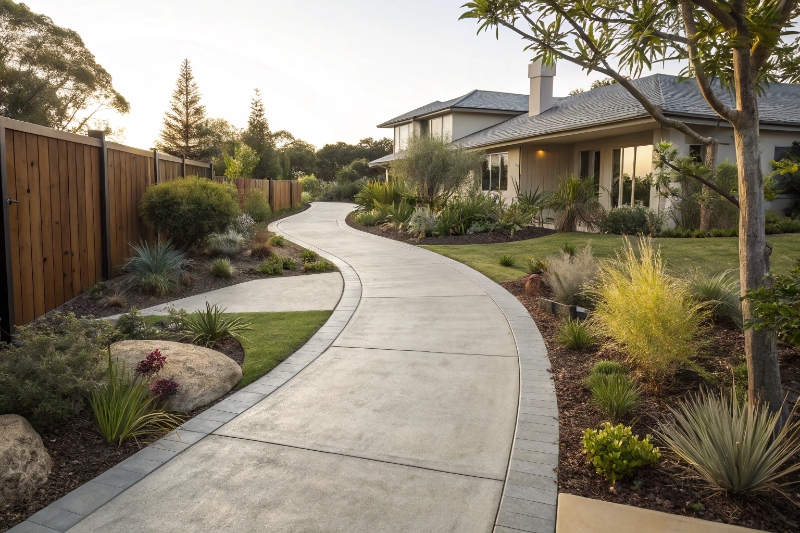
Long-Term Home Performance & Value Protection: Quality slabs provide level, stable bases for your home’s entire life. They enable energy-efficient construction with insulated systems and create moisture barriers protecting homes from ground dampness. Combined with termite barriers, proper slabs meet 6-year structural warranty requirements while maintaining property resale value and marketability.
Working with Builders & Engineers for Your Project: Collaborative processes are essential for house slabs. We review engineer-designed plans with builders, coordinate construction schedules, and clarify specifications before commencement. Certifier inspections occur at critical stages, with progress updates keeping all parties informed. We coordinate plumbing and electrical rough-in timing for builder framing schedules.
House Slab Costs & Investment Considerations in Newcastle
Factors Affecting House Slab Pricing: Home size and total floor area directly impact costs. Site preparation, excavation requirements, and equipment access affect pricing. Engineer design complexity, location within the Newcastle region, and builder coordination timing influence final costs. Additional services like piers, extra reinforcement, and specialised systems add to the investment.
Reactive Soil Sites vs Stable Site Costs: Class A stable sites have baseline conventional slab costs. Class M/H reactive sites require waffle pod or stiffened raft systems, typically costing 20-40% more than stable sites. Class P highly reactive sites need deep pier systems and specialised design, commanding premium pricing. Most Newcastle sites are Class H.
Long-Term Value of Proper Foundation Investment: Foundation investment represents 4-8% of total home cost, but remains the most critical element. Proper slab design protects structural integrity and prevents repair costs often exceeding the original slab investment. Quality foundation work provides ROI over your home’s lifetime through warranty protection and maintained property value.
Frequently Asked Questions About House Slabs in Newcastle
How long does it take to install a house slab in Newcastle?
We typically complete a standard house slab in 2-4 weeks from site preparation to final certification. Reactive clay sites with waffle pod slabs and deep piers take longer than simple conventional slabs on stable ground. Weather, site access, and engineer inspection scheduling affect timelines. We coordinate closely with your builder to keep your project on schedule.
Do I really need a waffle pod slab, or can I use a cheaper conventional slab?
Your geotechnical soil report determines what slab you need—not your budget preferences. If your site tests as Class H or P reactive clay (common throughout Newcastle), a conventional slab will crack and cause structural damage within years. We’ve seen homeowners spend $30,000+ fixing foundation problems from using the wrong slab type. The soil classification isn’t negotiable.
What's the difference between a waffle pod slab and a stiffened raft slab?
Both handle reactive soils, but waffle pod slabs use polystyrene void formers between reinforced beams, creating a lighter system that reduces soil pressure. Stiffened raft slabs are solid concrete with integrated stiffening beams throughout. We recommend waffle pods for highly reactive Class H sites and stiffened rafts for moderately reactive Class M locations based on your engineer’s design.
How deep do the piers need to go on reactive clay sites?
Pier depth depends on your geotechnical report’s recommendations—typically 2-4 meters on Class H sites, sometimes deeper on Class P highly reactive locations. The engineer designs the pier depth to reach stable soil below the reactive clay layer. We’ve drilled piers exceeding 5 meters on particularly challenging Newcastle sites where surface soils showed extreme reactivity.
Can you pour a house slab in winter?
Yes, we pour slabs year-round in Newcastle. Cold weather slows concrete curing, so we adjust our approach with proper protection and curing methods. We won’t pour in heavy rain or when temperatures drop too low overnight. Winter actually offers advantages—less extreme heat means better curing conditions and easier working conditions for our team.
What happens if it rains after you pour the concrete?
Light rain after the concrete has started setting won’t harm your slab—we protect fresh concrete with plastic sheeting if needed. Heavy rain during or immediately after pouring can damage the surface finish, so we monitor weather forecasts closely and postpone pours when significant rain is predicted. Once concrete reaches initial set (usually 4-6 hours), rain won’t affect structural integrity.
Get Your Free House Slab Quote Today
Building on Newcastle’s reactive clay soils? Your home deserves a foundation designed for the specific soil conditions on your site. At A1 Concreters Newcastle, we don’t guess—we work from your geotechnical report and engineer specifications to deliver compliant, certified house slabs that prevent the structural problems costing homeowners tens of thousands in repairs.
We serve Newcastle, Maitland, Cessnock, Lake Macquarie, Port Stephens, and throughout the Hunter region with engineer-designed waffle pod slabs, conventional reinforced slabs, and stiffened raft systems matched to your soil classification.
Contact A1 Concreters Newcastle now for your free house slab assessment.
