Professional Concrete Work Across Hunter Valley
Hunter Valley properties require diverse concrete applications suited to specific property types and usage requirements. Residential projects in Cessnock, Bellbird, and Weston typically include driveways, outdoor entertainment areas, pathways, and pool surrounds. These installations need appropriate thickness specifications, reinforcement methods, and finishes that complement existing property features while handling expected foot and vehicle traffic.
Commercial and industrial developments throughout Branxton, Kurri Kurri, and Cessnock’s business districts demand heavier-duty concrete solutions. Warehouse floors, loading bays, parking facilities, and access roads require engineered concrete mixes with higher compressive strength ratings. Surface preparation becomes critical for achieving proper adhesion and preventing delamination under constant heavy use.
Decorative concrete applications—including stamped patterns, exposed aggregate finishes, and coloured concrete—serve both residential and commercial properties. These installations combine aesthetic requirements with functional performance, requiring specific techniques for achieving a consistent appearance while maintaining structural integrity throughout Hunter Valley’s seasonal temperature variations.

Solutions for Cessnock’s Concrete Challenges
Hunter Valley’s reactive clay soils expand and contract in response to moisture changes, causing ground movement that stresses concrete installations. Proper solutions include deeper excavation to remove unstable topsoil, a compacted road base providing a stable substrate, and appropriately spaced controljoints to aaccommodateexpected movement. Reinforcement mesh or fibre additives distribute loads, reducing crack formation.
Drainage management prevents water accumulation, undermining concrete edges and accelerating deterioration. Sloping surfaces direct runoff away from structures, while adequate subsurface drainage controls moisture affecting clay soil behaviour beneath concrete slabs.
Temperature variations between Cessnock’s hot summers and cool winters require appropriate curing methods. Proper curing prevents surface defects, ensures strength development, and reduces shrinkage cracking. Sealing concrete surfaces protects against moisture penetration, UV damage, and chemical exposure from vehicle fluids, agricultural products, or industrial substances common throughout Hunter Valley properties.
Concrete Solutions for Cessnock Homeowners
Driveways and Vehicle Access Areas
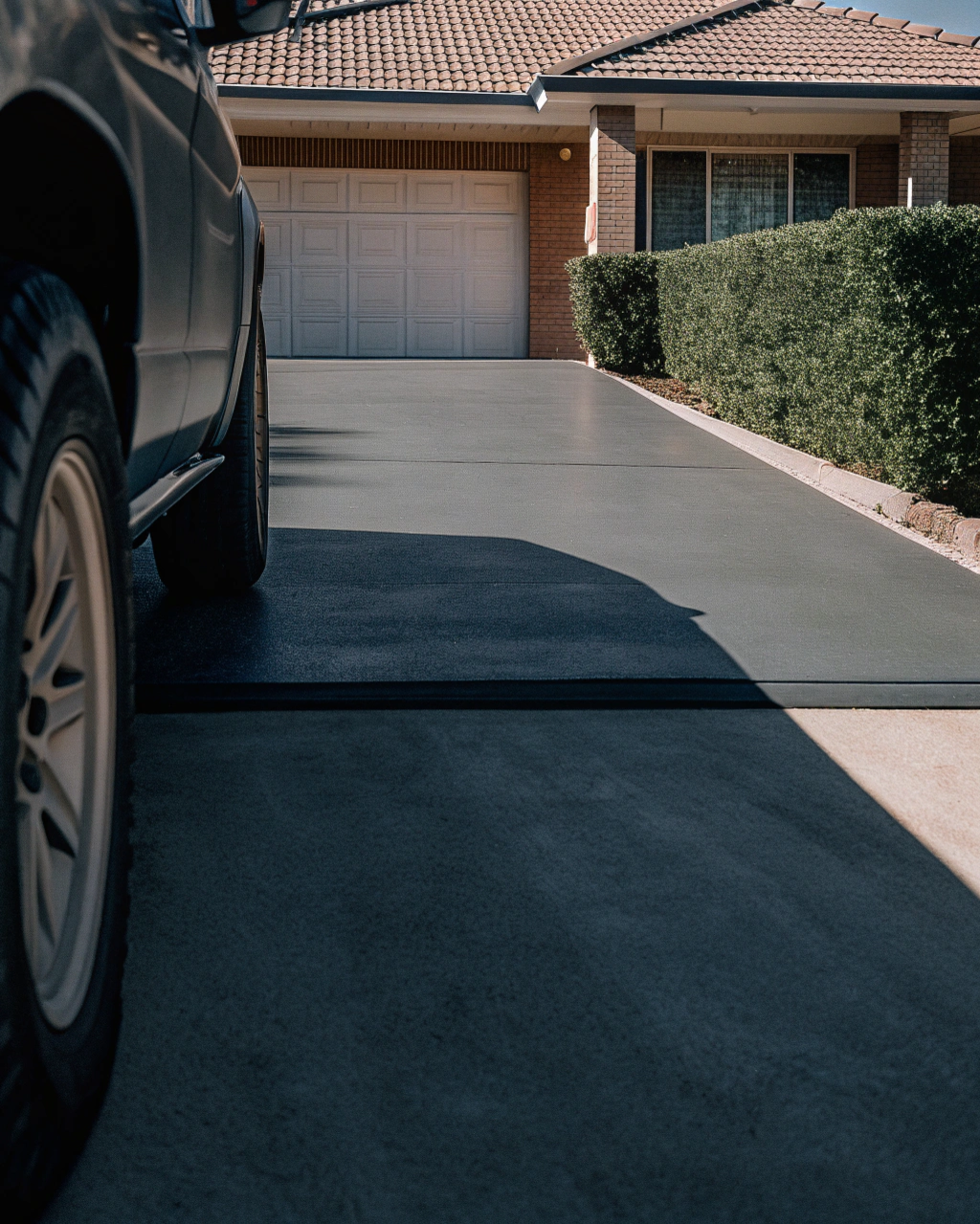
Cessnock residential driveways handle daily vehicle traffic while contributing to street appeal and property value. Standard residential driveways require 100-125mm thickness with appropriate reinforcement mesh to prevent cracking under vehicle loads. The base preparation process addresses Hunter Valley’s clay soils through proper excavation depth, compaction, and drainage considerations. Surface finish options range from basic broom finish for traction to exposed aggregate or stamped patterns. Driveway width typically accommodates two vehicles side-by-side, with turning areas requiring additional planning for proper concrete placement and control joint positioning.
Outdoor Entertainment and Patio Areas
Concrete patios extend Cessnock homes’ living spaces for family gatherings and outdoor entertainment. Installation depth varies between 75-100mm depending on expected furniture loads and usage patterns. Decorative options include stamped concrete replicating stone or timber patterns, coloured concrete matching property aesthetics, or exposed aggregate finishes providing texture and visual interest. Proper slope design ensures water runoff away from house foundations. Patio sizing considerations account for furniture placement, traffic flow, and integration with existing landscaping features. Control joints prevent random cracking while maintaining clean appearance lines.
Commercial Concrete Services for Cessnock Businesses
Warehouse and Industrial Flooring
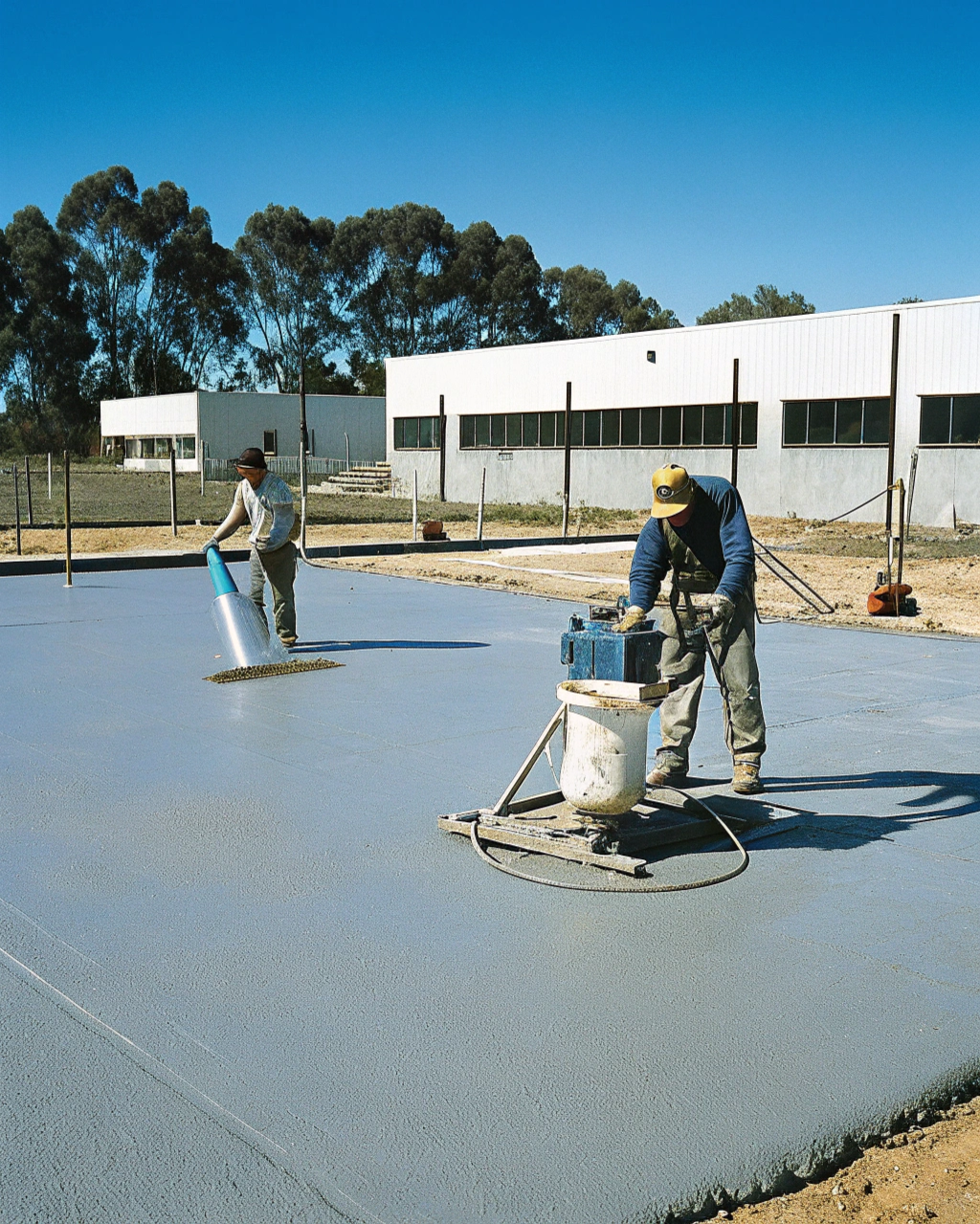
Commercial warehouse facilities in Cessnock require concrete flooring engineered for forklift traffic, pallet storage loads, and continuous operational demands. Industrial floor specifications typically demand 150-200mm thickness with steel reinforcement or fibre additives for enhanced load distribution. Surface flatness standards become critical for efficient forklift operation and racking system installation. Joint spacing, saw-cut timing, and proper curing prevent surface defects that compromise warehouse functionality. Chemical resistance properties matter for facilities handling automotive products, agricultural chemicals, or manufacturing processes common throughout Hunter Valley’s industrial sectors.
Commercial Parking and Access Areas
Cessnock business properties require parking facilities designed for constant vehicle movement and weather exposure. Commercial parking lot specifications exceed residential standards, typically using 125-150mm concrete thickness with appropriate reinforcement for anticipated traffic volumes. Slope design ensures proper drainage, preventing water pooling that accelerates surface deterioration. Line marking integration, disabled parking bay requirements, and traffic flow patterns influence concrete placement and control joint locations. Access driveways connecting to public roads need council-compliant grades, transitions, and load-bearing capacity for delivery vehicles servicing Cessnock commercial premises.
Concrete Repair and Restoration for Cessnock Properties
Existing concrete surfaces throughout Cessnock deteriorate from ground movement, weather exposure, and normal wear patterns. Crack repair addresses structural and cosmetic issues through routing and sealing techniques, preventing water infiltration and further damage progression. Surface spalling—where concrete flakes or chips away—requires grinding damaged material and applying bonded overlay systems, restoring smooth, functional surfaces.
Sunken or uneven concrete sections result from soil settlement beneath slabs. Concrete levelling techniques lift settled areas back to proper height and slope, eliminating trip hazards and drainage problems without complete replacement costs.
Resurfacing applies thin concrete toppings over structurally sound but cosmetically worn slabs, refreshingthe ppearance while adding protection layers. This approach suits Cessnock driveways, patios, and commercial floors showing surface deterioration but maintaining adequate structural integrity. Assessment determines whether repair, restoration, or replacement provides appropriate solutions for specific damage conditions.
Concrete Installation Process and Project Timelines
Concrete projects in Cessnock follow systematic processes ensuring quality outcomes and realistic completion expectations. Initial site assessment examines soil conditions, drainage patterns, and access requirements, determining preparation needs. Ground preparation includes excavation, base material installation, and compaction—typically requiring 1-2 days for standard residential projects.
Key Timeline Factors:
- Weather conditions affecting pour scheduling and curing
- Concrete curing period before surface use (typically 7-28 days, depending on application)
- Council approval requirements for specific projects
- Material delivery coordination with suppliers
- Site access constraints affecting equipment positioning
Concrete placement occurs during suitable weather conditions, avoiding extreme temperatures or rain forecasts. Finishing techniques apply immediately following pour, including screeding, floating, and chosen surface treatments. Control joint cutting happens within a specific timeframe,s preventing random cracking.
Full strength development requires 28 days, though light foot traffic typically occurs after 24-48 hours. Vehicle access timing depends on concrete thickness and application.



Frequently Asked Questions
Why does Cessnock's clay soil matter for concrete installation?
Hunter Valley’s reactive clay soils expand when wet and shrink during dry periods, creating ground movement. Proper excavation depth, compacted base material, and appropriate reinforcement prevent cracking from soil-related stress. Inadequate preparation causes premature concrete failure regardless of installation quality.
How soon can I walk or drive on new concrete?
Light foot traffic typically occurs after 24-48 hours. Vehicle access requires a minimum of 7-10 days for residential driveways, longer for heavier vehicles. Full-strength development takes 28 days. Premature loading causes surface damage and structural compromise, affecting long-term performance.
What concrete thickness do I need for my Cessnock driveway?
Residential driveways typically require 100-125mm thickness with reinforcement mesh. Heavier vehicle access or commercial applications need 125-150mm or greater. Clay soil conditions throughout Cessnock may warrant increased thickness beyond standard specifications. Proper base preparation matters more than thickness alone for performance.
How do you prevent cracking in concrete installations?
Control joints cut at planned intervals manage expected cracking, directing it to predetermined locations. Proper reinforcement, adequate base preparation, appropriate concrete mix design, and controlled curing reduce random cracking. Hunter Valley’s clay soils and temperature variations make some minor cracking normal.
Can you repair existing cracked concrete or does it need replacing?
Many cracked concrete installations accept repair through routing, sealing, or overlay applications when structural integrity remains sound. Complete replacement becomes necessary when widespread cracking, significant sinking, or structural failure occurs. Assessment determines appropriate solutions based on damage extent and underlying causes.
