Hunter Valley Concrete Specialists
Working throughout Singleton Council requires understanding conditions that differ significantly from coastal Newcastle or Sydney metro areas. The Hunter Valley’s expansive clay soils contract and dry during summer months, then swell with winter rainfall. This soil movement affects concrete foundations, slabs, and driveways differently than stable coastal sand.
Rural properties face additional considerations. Access for concrete trucks on unsealed roads, coordinating around agricultural operations, and designing slabs that support heavy machinery demand different planning than suburban residential work. Properties in areas like Broke or Jerrys Plains often require solutions that account for limited water access and remote locations.
The region’s concrete work spans residential homes in established townships, new housing developments, commercial warehouses, agricultural infrastructure, and mining-related projects. Each application requires specific concrete mixes, reinforcement approaches, and installation techniques suited to both the project type and local ground conditions. Experience across these different sectors provides insight into what works reliably in Hunter Valley environments.

Residential Concrete Services Across Singleton Council
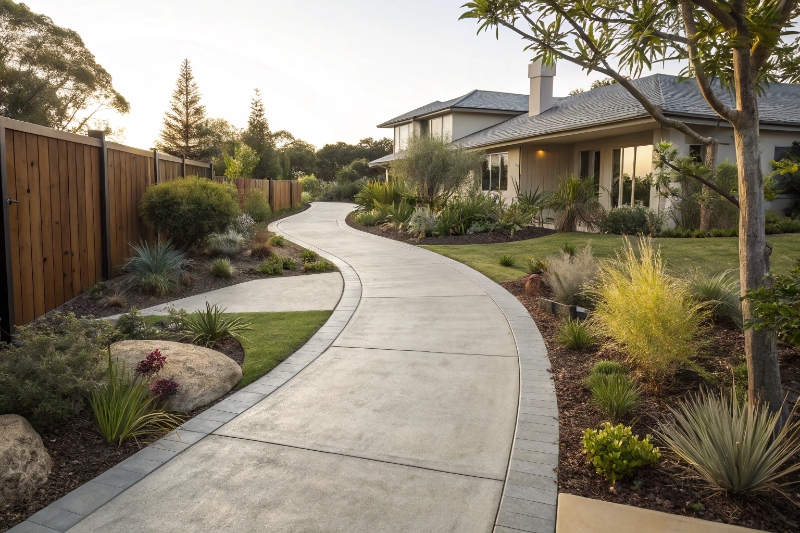
Residential concrete work throughout Singleton Council includes driveways, patios, pathways, and foundation slabs for homes in established areas like Singleton Heights and newer developments in Branxton. Each property presents different requirements based on soil conditions, site access, and intended use. Driveways need sufficient thickness and reinforcement to handle daily vehicle traffic, while outdoor entertainment areas require proper drainage and finish options that suit the property’s style.
Foundation preparation varies significantly across the council area. Properties on reactive clay soils require specific measures to manage ground movement, including deeper footings and appropriate reinforcement. Concrete finishes range from standard broom finish for functional areas to exposed aggregate, stamped patterns, or coloured concrete for feature areas like front entries and alfresco spaces.

Commercial Concrete Solutions for Hunter Valley Businesses
Commercial properties throughout Singleton Council require concrete that withstands heavier use than residential applications. Warehouse floors, retail shopfronts, office building entries, and car parks need adequate load-bearing capacity and appropriate surface finishes. Industrial facilities often require specific concrete specifications for forklift traffic, heavy storage loads, or particular operational requirements.
Business premises’ concrete work demands careful planning around operating hours tominimisee disruption. Commercial projects typically involve larger pours requiring coordination of multiple concrete trucks, proper curing procedures, and meeting Australian Standards for commercial construction. Council compliance, accessibility requirements, and drainage regulations add complexity to commercial concrete projects. Timeline coordination becomes critical when concrete work affects business operations or forms part of larger construction schedules requiring trade sequencing.
Rural and Agricultural Concrete Infrastructure
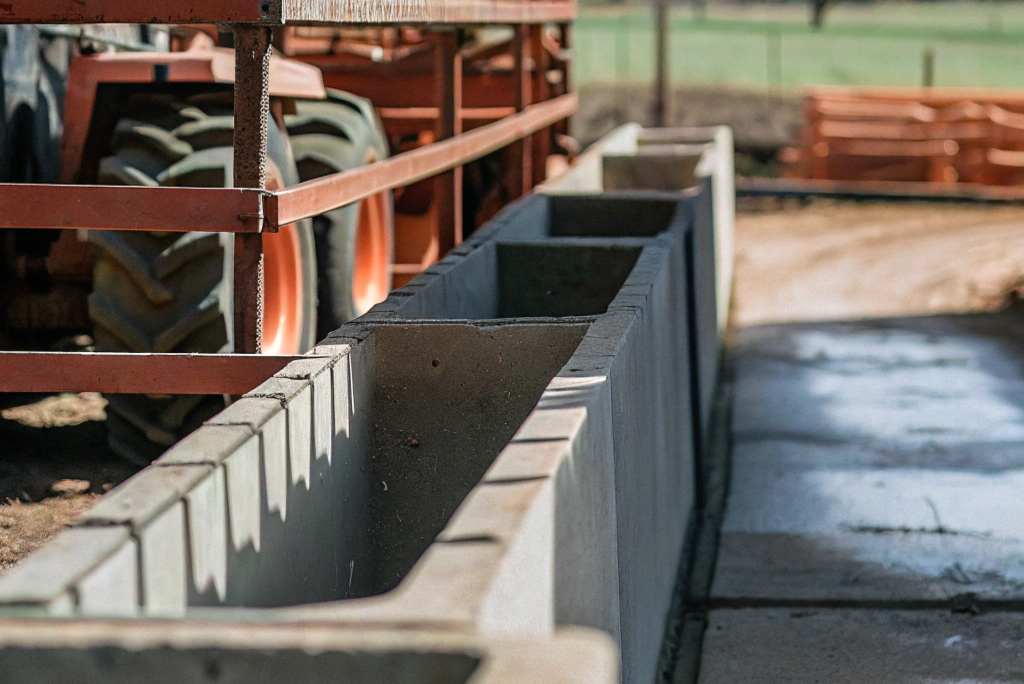
Agricultural properties across Singleton Council use concrete for machinery sheds, grain storage pads, livestock handling facilities, and equipment hardstands. These applications require concrete designed for heavy agricultural machinery, including tractors, harvesters, and loaded trucks. Slab thickness, reinforcement, and concrete strength specifications differ significantly from residential work.
Farm infrastructure projects face unique logistical challenges. Properties along rural roads may have limited access for concrete trucks, requiring careful planning of delivery timing and routes. Water availability for concrete mixing and curing can be limited on some properties. Project scheduling often works around seasonal agricultural operations, harvest periods, and weather conditions. Concrete placement for large agricultural buildings or storage areas may require substantial quantities in single pours, demanding coordination across multiple concrete suppliers.
Concrete Repair and Resurfacing Services
Existing concrete throughout Singleton Council deteriorates over time due to ground movement, weather exposure, and surface wear. Driveways develop cracks from soil expansion and contraction, while older slabs may show surface spalling or uneven settlement. Concrete repairs range from filling minor cracks to addressing significant structural issues requiring partial slab replacement.
Resurfacing provides an alternative to complete concrete removal when the underlying slab remains structurally sound. This process involves applying a new concrete overlay or specialised coating system over existing surfaces, restoring appearance and extending service life. Resurfacing works well for dated concrete patios, weathered driveways, or commercial floors showing surface wear but maintaining structural integrity.
Assessment determines whether repair or replacement offers the better solution. Factors include crack severity, foundation stability, drainage issues, and the extent of deterioration. Some concrete damage requires addressing underlying causes like poor drainage or inadequate reinforcement before surface repairs prove effective.
Foundation Requirements for Singleton Council Properties
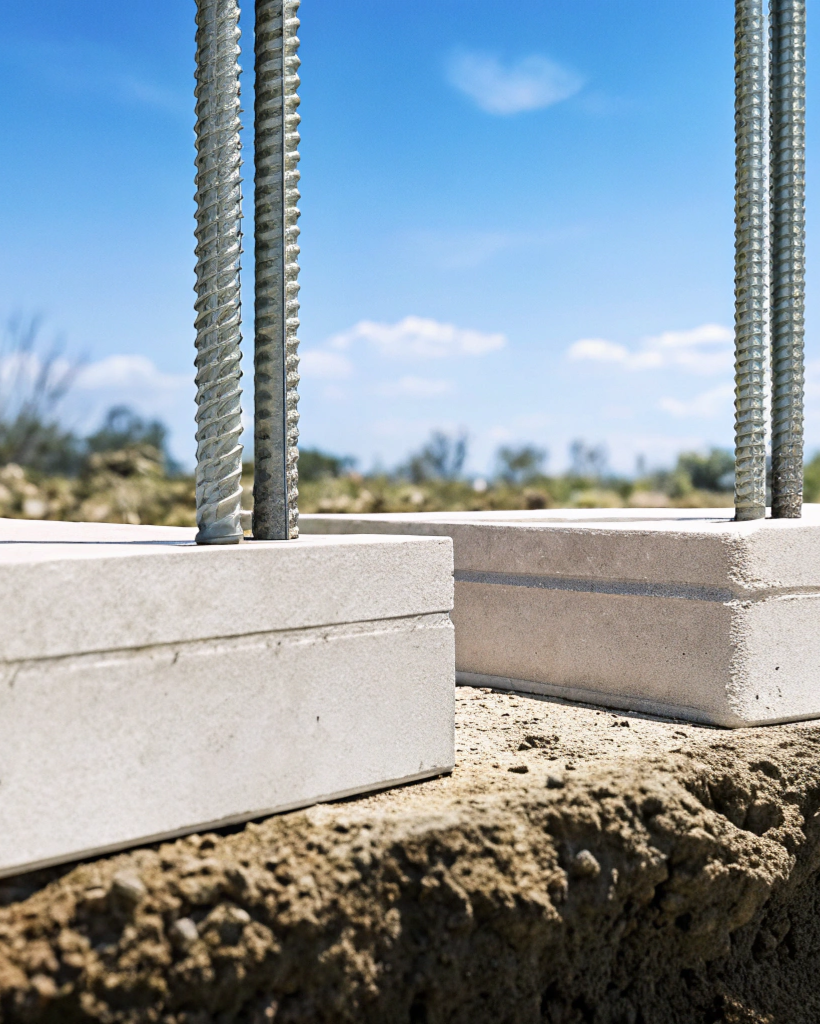
Singleton Council properties sit predominantly on reactive clay soils that expand with moisture and contract during dry periods. This ground movement creates specific foundation requirements different from stable coastal soils. Concrete slabs need adequate reinforcement and thickness to resist cracking as ground conditions change throughout the year.
Key foundation considerations include soil classification reports, determining reactivity levels, appropriate slab design ffor theidentified soil class, and reinforcement mesh or bar specifications. Edge beam depth and reinforcement requirements, moisture barriers beneath slabs, adequate compaction of fill materials, and proper drainage directing water away from foundations all contribute to foundation performance across the council area.
Council building approvals require engineering certification for residential slabs in areas with reactive soils. Commercial and industrial foundations demand higher load ratings and may require deeper footings or specialised foundation systems. Site-specific soil testing determines exact foundation specifications, as soil conditions vary significantly even within the same suburb.
Choosing the Right Concrete for Your Project
Concrete specifications vary based on project type, load requirements, and environmental exposure. Residential driveways typically use standard-strength concrete with mesh reinforcement, while commercial warehouse floors require higher-strength mixes and potentially fibre reinforcement for crack control. Agricultural applications like machinery pads need concrete designed for heavy point loads and continuous traffic.
Mix design considerations include compressive strength ratings, aggregate size, cement content, and admixtures affecting workability or curing time. Finish options range from basic broom finish for functional areas to exposed aggregate, stamped patterns, or coloured concrete for decorative applications.
Climate factors influence concrete selection throughout Singleton Council. Summer heat affects curing rates and may require specific admixtures, while winter conditions impact setting times. Rural properties might need concrete mixes accounting for longer transport distances from batching plants, ensuring adequate workability upon arrival at remote sites.


Frequently Asked Questions
How do reactive clay soils affect concrete in Singleton Council?
Reactive clay soils expand when wet and contract when dry, causing ground movement. Proper foundation design includes adequate reinforcement, appropriate slab thickness, edge beams, and moisture barriers to manage seasonal soil changes common throughout the area.
What's the typical timeline for a residential driveway?
Residential driveways typically take two to three days, including site preparation, formwork, concrete pouring, and finishing. Curing requires seven days before vehicle traffic. Weather conditions and site access can extend timelines, particularly for rural properties.
Do you handle both small residential and large commercial projects?
Yes, projects range from residential patios and driveways to large commercial warehouse floors, agricultural machinery pads, and industrial infrastructure. Experience spans suburban residential work through to multi-hundred square metre rural and commercial applications throughout Singleton Council.
How does weather affect concrete work in this region?
Summer heat accelerates curing and may require admixtures or afternoon pours. Winter cold slows setting times. Rain delays pours and affects ground conditions. Hunter Valley weather patterns influence project scheduling, particularly for larger commercial or agricultural projects requiring specific conditions.
What council approvals are needed for concrete work?
Residential slabs require engineering certification and council approval, particularly on reactive soils. Driveways crossing footpaths need council permits. Commercial projects require approval and compliance certification. Requirements vary based on project scope, location, and property zoning throughout the council
What's the difference between residential and commercial concrete?
Commercial concrete typically uses higher-strength mixes, heavier reinforcement, and thicker slabs for increased load capacity. Residential concrete suits standard vehicle traffic and lighter loads. Commercial projects require compliance with Australian Standards for commercial construction and specific industry requirements.
Top sights in Singleton
